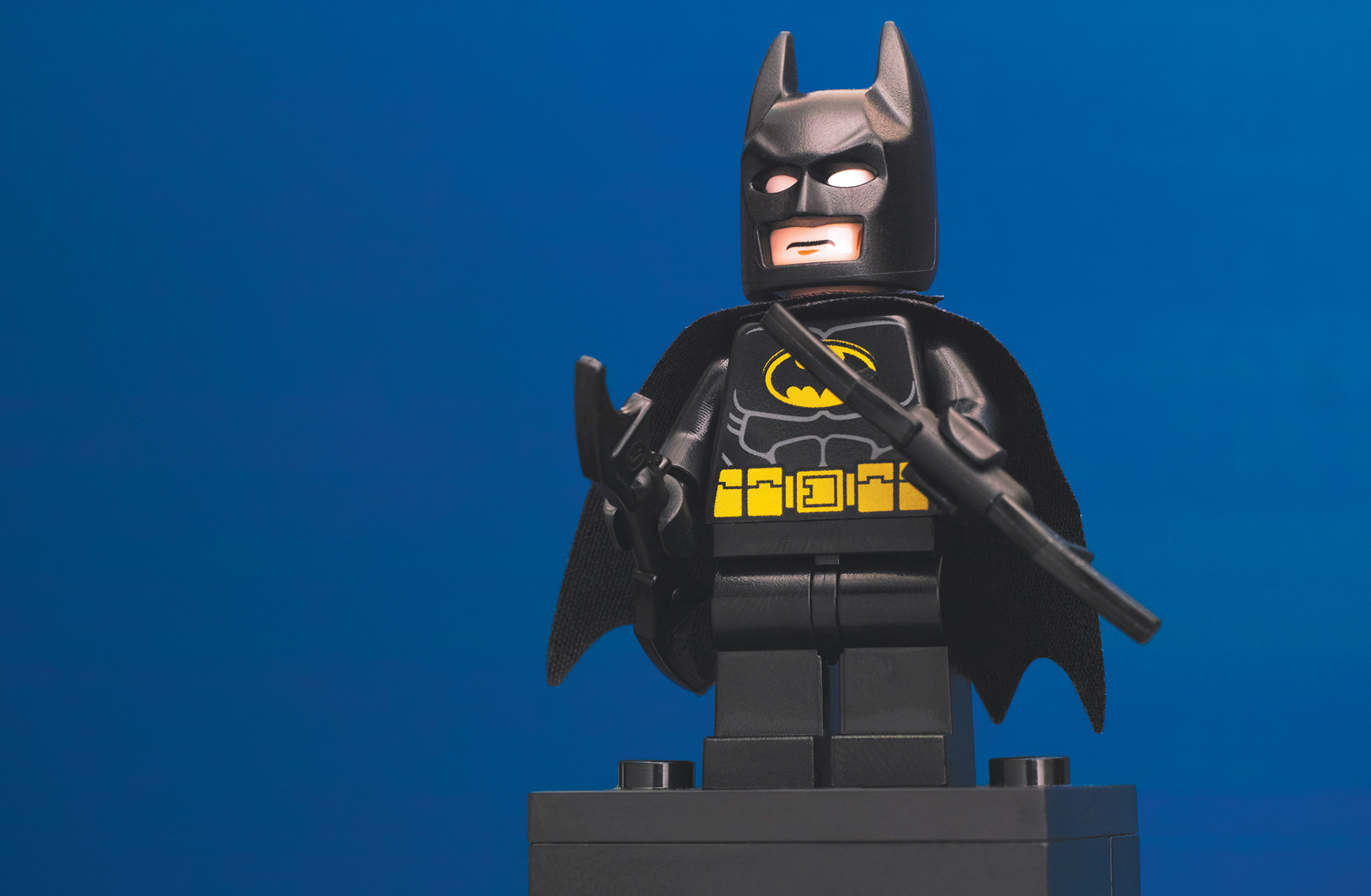
Researchers at the University of Alberta are developing Batman-inspired ‘smart-wear’ that can change its stiffness and shape. The clothing is designed to help individuals recover from injuries quicker, assist those with muscle weakness, and increase mobility for individuals with mobility issues. The project secured a $24-million grant to facilitate its development.
Vivian Mushahwar, a professor in the faculty of medicine and dentistry, and director of the Institute for Smart Augmentative and Restorative Technologies and Health Innovations (iSMART) and Smart Technology (ST) Innovations, is leading a team of 64 researchers from around the world to create this technology. The team includes fashion designers, clothing manufacturers, disability advocates, and visual artists.
Intended as wearable technology, the smart-wear is envisioned to look and feel like regular clothing. Mushahwar explained the inspiration came from how Batman’s clothing “changes and stiffens” based on his needs.
According to the research team, the second highest cause of disability in adults 65 years and older is muscle weakness.
“This new clothing will change its shape and its stiffness to assist people while they’re doing daily activities. The way it’s going to do this is because of the fibres that are inside [the] clothing”.
“With an aging population, we obviously [need] to be able to assist people to age in a healthy manner and keep them as active as possible,” Mushahwar said.
The inspiration for the project came from Professor Mushahwar’s research in the disability field of spinal cord injuries. She wanted to create something that would help individuals deal with the challenges they face daily. Additionally, she wanted to create something that was functional for daily wear.
Dan Sameoto, a professor in mechanical engineering at the U of A, and co-investigator on the project, spoke about the origins of the technology and the challenge of inventing a composite that changed stiffness 1,000 times to eventually develop the base for the smart-wear’s material.
“The team does 3D-printing with multiple materials to get a pre-form. The polymers, metals, and rubbers can all be combined into a single complex structure that can then be drawn down using heat, just like taffy, and pulled into these exceptionally fine fibres,” according to Sameoto. He added that one goal is to have the smart-wear act as “artificial muscle” for wearers.
Danielle Peers, a Canada Research Chair (CRC) in Disability and Movement Cultures and co-principal investigator, discussed how individuals with mobility issues have been a part of the project’s direction. “Many products that are created for folks with disabilities come from [these] amazing idea[s] in people’s heads. But often we don’t have the relationships with the end users that allow us to be really, truly creative so that we’re making something that makes their lives better,” he suggests. According to Peers, as this technology improves it will be able to help those with muscle weakness or other mobility issues be able to do everyday tasks more easily.
“People always imagine that when you live with a disability, the disability is the hardest thing in your life. It’s not. It’s often the isolation, [and] the structures and barriers you reach every day. This is the kind of project that will transform those lives and allow us to stay connected”.
“A lot of scientists start with the idea of ‘how do we fix people?’ An early challenge we offered to [Mushahwar] and the team was – ‘I don’t want to be fixed,’” Peers said, explaining that instead, we wanted to build resources that improve quality of life and reduce disability-related barriers. With a little more support, we can make fall and injury less likely. With a little more strength, people can get back to the full meaning of their lives”.
Gabriella Menezes, is with the University of Alberta, and Staff Reporter and Executive Director at The Gateway.
Image: iStock