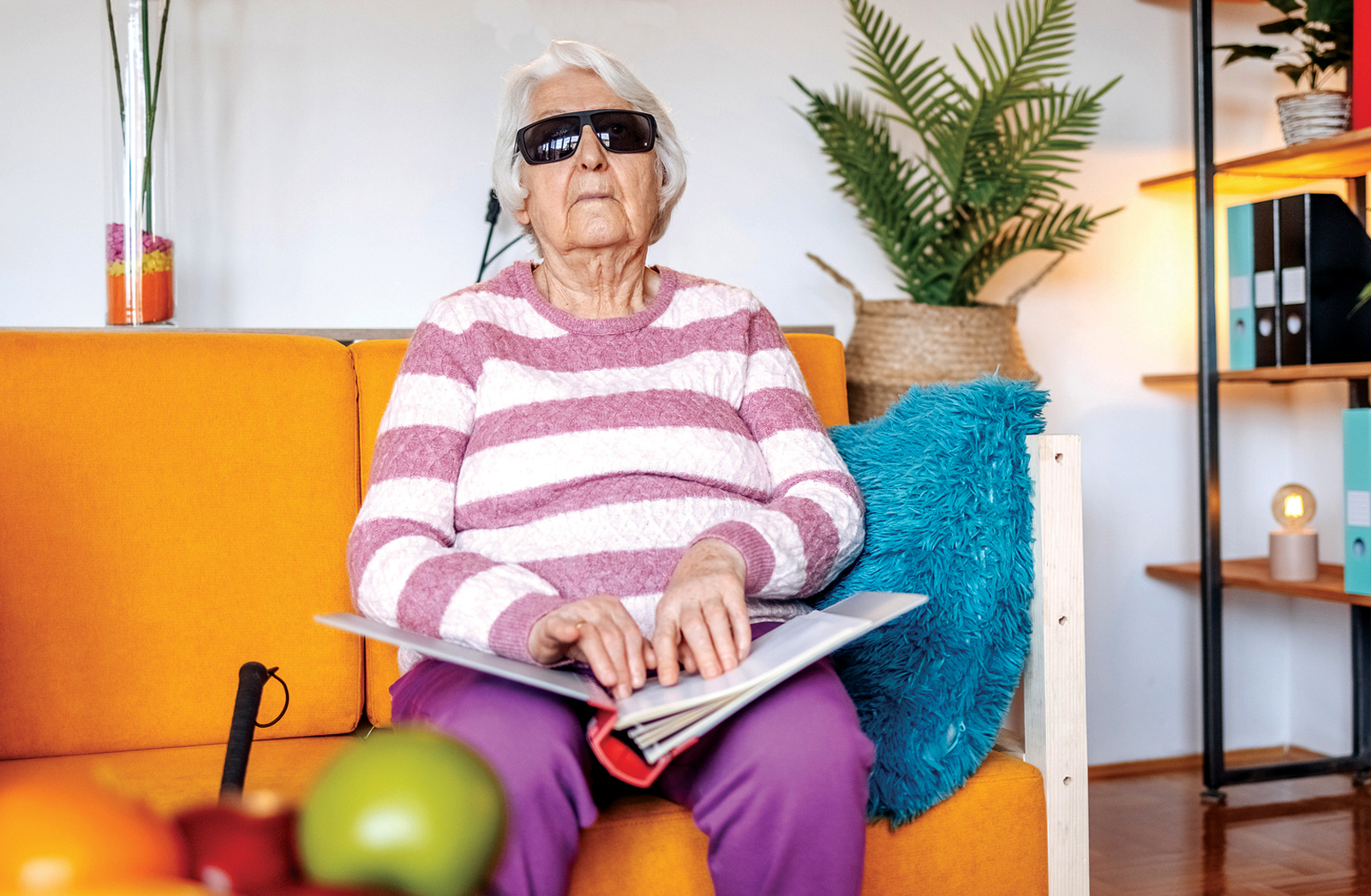
Sensory loss has been linked to cognitive decline. A large body of evidence suggests that individuals with hearing and/or vision loss have an increased risk of developing cognitive impairments, including dementia (although not everyone with a sensory loss develops dementia)1-3. We do not yet know how exactly sensory losses and cognition are linked but several possible explanations are discussed. Taking preventative measures to protect your sensory health and addressing sensory challenges when they arise are key to preserving your cognitive function and reducing risk for dementia.
What the research tells us
A landmark study reported that older adults with hearing loss had a 24% increased risk of cognitive decline compared to those with normal hearing1. Since then, many other studies have reported similar findings of links between hearing loss and cognitive decline2. Vision loss also increases the risk for cognitive decline3. Untreated vision loss has been added to the list of potentially modifiable risk factors for dementia4. Research in Canada found that hearing and vision loss together (i.e., dual-sensory loss) are linked to declining cognitive performance in older adults5.
New research evidence from a 2024 review predicts that 9% of dementia cases could be reduced if hearing loss (7%) and vision loss (2%) were eliminated4. A full list of potentially modifiable risk factors for dementia can be found here6.
Researchers have proposed three possible explanations for the links between sensory and cognitive functions:
• The same health issues (e.g., poor heart health or diabetes) can cause both sensory impairments and poorer brain health7.
• Staying active is good for brain health, but sensory impairments can make it more difficult for people to stay active. People with sensory impairments often have lower physical activity levels8;9 and less social interactions10. In turn, reduced physical and social isolation have been shown to increase the risk of cognitive decline and dementia11;12.
• Poor hearing and vision make it harder for the brain to understand and/or remember information. Over time, the structure of the brain and how the brain uses information may change permanently7. The brain may have to work harder and it may become more difficult to do two things at the same time (e.g., listening to the radio while driving a car or talking to a friend while crossing the road)13.
Recommendations
• Protect your senses: Use protection to avoid damage to the eyes and ears.
• Check your senses: Using free online tests to check hearing and vision can help people to recognize if they have sensory problems, starting at age 50.
• Seek help if you have sensory problems: People should seek help and information about how to live with sensory impairments as soon as they notice sensory problems.
• Use your senses to stay active: Hearing and seeing better may make it easier and more enjoyable to participate in regular physical and social activities (e.g., engaging in meaningful conversations or doing sports with friends). In turn, these activities are good for brain health14-16.
Dr. Natalie Phillips is a Professor in the Department of Psychology at Concordia University. Phillips is a licensed clinical neuropsychologist and holds the Concordia University Research Chair in Sensory-Cognitive Health in Aging and Dementia.
Dr. Aaron Johnson is an associate professor in the department of Psychology, and associate vice-president of research at Concordia University. He also serves as the director of the Rehabilitation and Social Issues of Visual Disorders Axis in Québec’s Vision Sciences Research Network.
Provided by the McMaster Aging Portal. References available on request.
Image: iStock